
Emerging Technologies
Flow Chemistry Training in AR
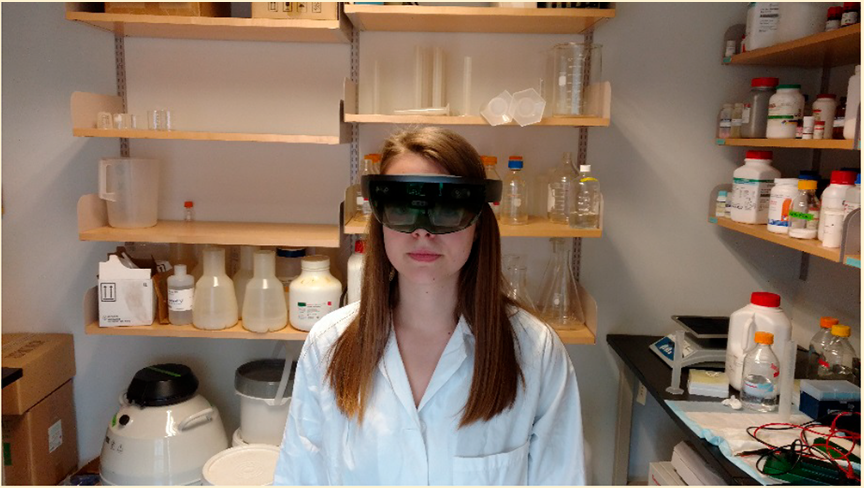
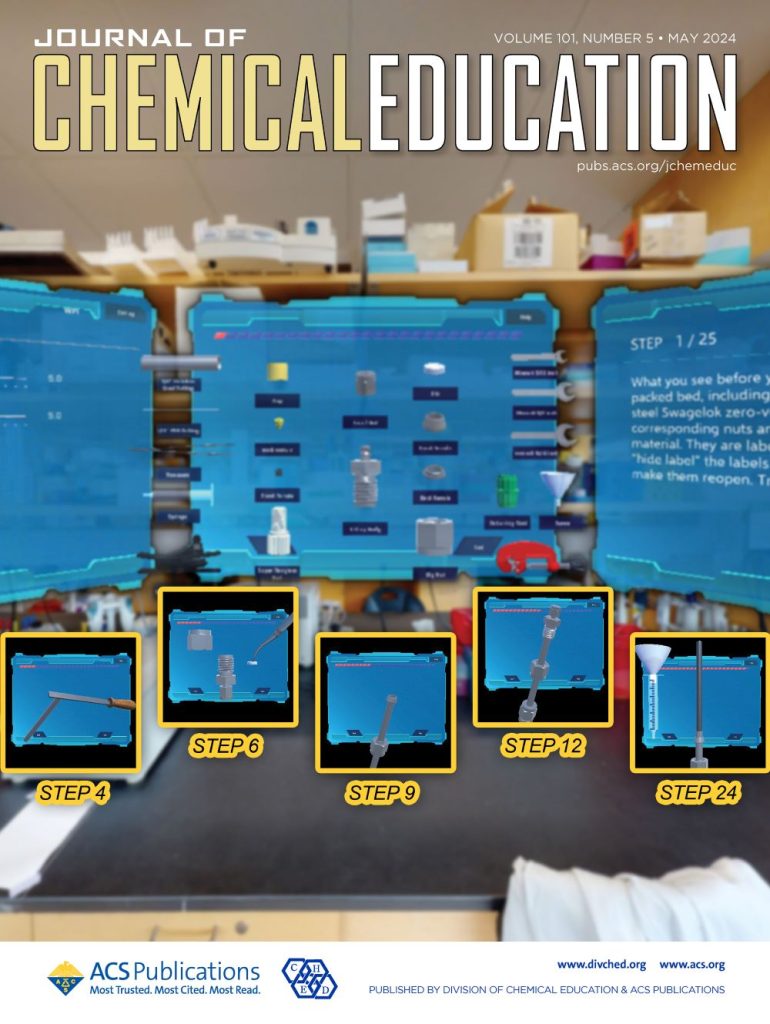
As part of the Department of Energy RAPID grant, we developed an augmented reality program to build a flow chemistry setup. The overall objective of this project was to create an AR program that teaches flow chemistry in an engaging manner, creating excitement about exploring this process. The flow chemistry application uses the HoloLens 2 to project holograms in a laboratory or classroom environment. The HoloLens 2 is a powerful AR device that includes capabilities for hand gestures, spatial mapping, and voice recognition. Although the HoloLens 2 does include other features that may be relevant in future training programs, we focus on voice recognition in our system because hand gestures currently require training to achieve proficiency.
Publication
- Chen, Max, Yichen Li, Hilson Shrestha, Noëlle Rakotondravony, Andrew Teixeira, Lane Harrison, and Robert E. Dempski. “FlowAR: A Mixed Reality Program to Introduce Continuous Flow Concepts.” Journal of Chemical Education (2024).
- Zhu, Bolin, Mi Feng, Hannah Lowe, Jeffrey Kesselman, Lane Harrison, and Robert E. Dempski. “Increasing enthusiasm and enhancing learning for biochemistry-laboratory safety with an augmented-reality program.” Journal of Chemical Education 95, no. 10 (2018): 1747-1754.
Protein Structure Visualization In AR
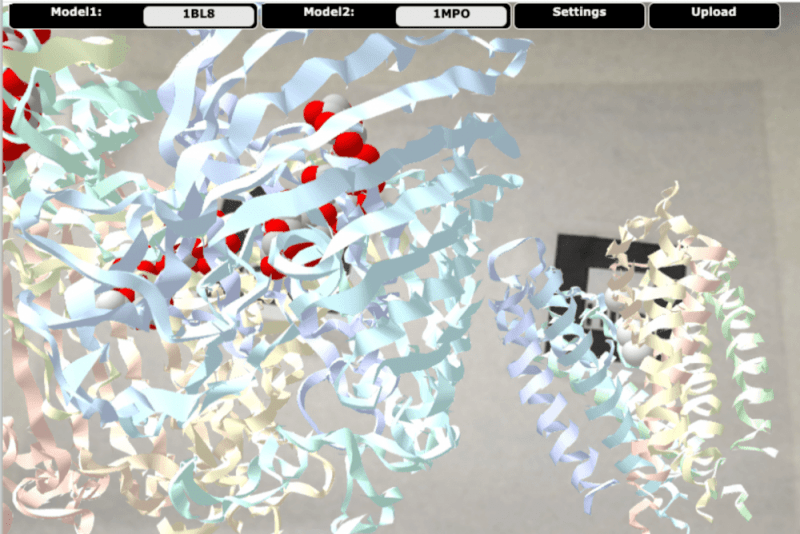
We developed an augmented reality (AR) web application that helps undergraduate students explore and better understand protein structures in 3D. Users can download structure models directly from the Protein Data Bank (PDB) using a PDB ID and launch them in AR by scanning a 2D marker. The app supports multiple visualization styles and allows two protein structures to be viewed side-by-side for comparison.
360 Lab Virtual Tours
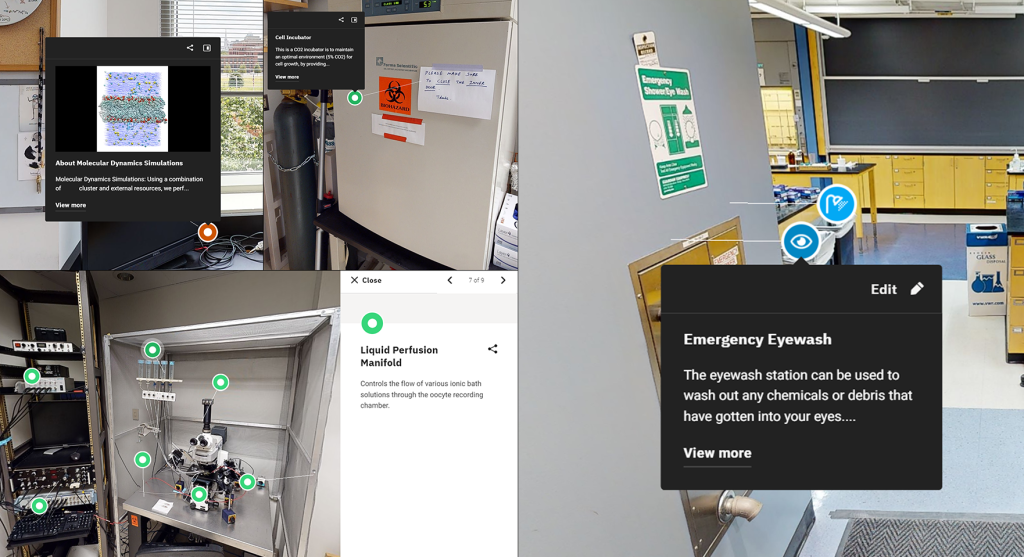
We created 360 virtual tours for research laboratories and facilities using Matterport. Virtual tours are immersive experiences that allow individuals to explore and interact with a physical space remotely. These tours provide a 360-degree view and often incorporate multimedia elements, such as images, videos, and audio, to enhance user engagement.
Research labs and facilities can benefit from virtual tours as a powerful tool for advertising and showcasing their capabilities. Teaching labs can use virtual tours to deliver learning materials in an engaging way.